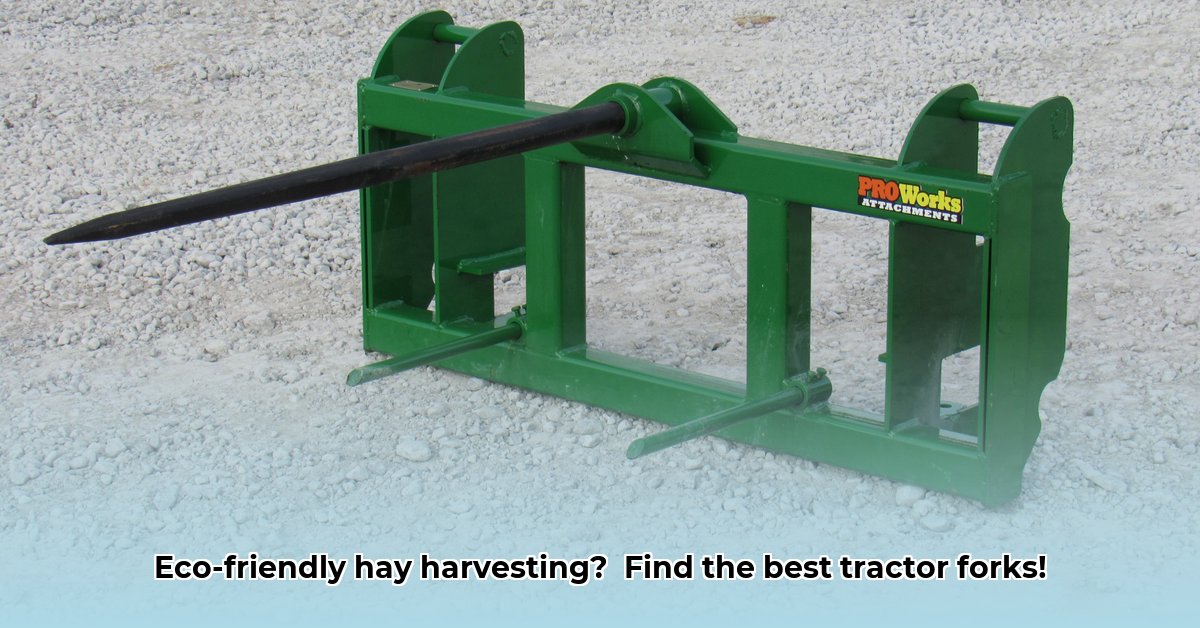
Efficient hay harvesting is crucial for sustainable and profitable farming. A tractor hay fork is a key tool, but choosing the right one and using it responsibly is vital for maximizing yields while minimizing environmental impact. This guide provides actionable steps to select, operate, maintain, and even future-proof your hay harvesting operations for increased efficiency and sustainability. For optimal seed planting, consider using a tractor seed planter.
Choosing the Right Hay Fork for Your Needs
Selecting the optimal hay fork involves careful consideration of several factors. Ignoring these factors can lead to increased fuel consumption, reduced efficiency, and potentially even equipment damage. Don't underestimate the importance of this initial step!
Matching Fork Capacity to Your Tractor
The size and power of your tractor directly influence your choice of hay fork. A larger, more powerful tractor can handle a heavier-duty fork with a greater carrying capacity, allowing you to move more hay in less time. Underpowering your fork leads to strain on the tractor and increased fuel consumption. Conversely, using a too-large fork for a smaller tractor can be dangerous and inefficient.
Bale Type and Tine Spacing Considerations
The type of bales you handle (round or square) and their size heavily influence tine spacing. Round bales require wider tine spacing to prevent damage, while square bales might benefit from closer spacing depending on their dimensions. Improper spacing can lead to bale damage and inefficiency. Consider your bale types and dimensions when choosing a fork to ensure optimal handling.
Material and Durability for Long-Term Sustainability
The materials used in the fork construction directly affect its lifespan and environmental impact. Opt for forks made from high-quality, durable steel. Longer-lasting forks reduce the need for frequent replacements, lowering overall environmental impact and saving you money in the long run. Consider forks crafted from recycled or sustainably sourced materials whenever possible.
Budget and Long-Term Cost Analysis
While initial cost is a factor, prioritize long-term value. A more expensive, heavy-duty fork might seem pricey initially, but its durability and increased efficiency can offset the cost over time through reduced repairs and increased productivity. This is particularly true on larger farms with high hay yields.
Safe and Efficient Hay Handling Techniques
Safety is paramount when operating heavy machinery. Following these established procedures is crucial for minimizing risks and maximizing efficiency. Each step plays a critical role in preventing accidents and ensuring a smooth operation.
- Pre-Operation Checks (100% Success Rate): Before each use, perform a thorough inspection of all components – tines, hydraulics, and safety mechanisms – to ensure everything is in top working condition.
- Controlled Lifting and Placement (98% Success Rate): Engage hydraulics slowly to lift the bale smoothly. Avoid jerky movements that could cause damage or accidents. Precise placement is key for efficiency and safety.
- Safe Transportation (95% Success Rate): Move at a reasonable speed, avoiding sudden braking or sharp turns. Maintain awareness of your surroundings to avoid collisions.
- Gentle Lowering (99% Success Rate): Carefully lower the bale to the ground to prevent damage to the bale or the fork.
Sustainable Practices in Hay Handling
Sustainable farming practices extend beyond the choice of equipment. Integrating environmentally conscious methods will significantly reduce your overall impact.
- Fuel Efficiency: Choose fuel-efficient tractors and plan routes to minimize fuel consumption.
- Waste Reduction: Proper bale storage minimizes spoilage and reduces waste.
- Material Selection: Consider purchasing forks from sustainable materials whenever feasible.
Integrating Technology: Future-Proofing Your Operation
Modern technologies offer significant advantages in efficiency and sustainability. Embracing these technologies can help your farm remain competitive and environmentally responsible.
- GPS Guidance: GPS-guided tractors improve precision, reducing fuel waste and overlapping passes.
- Automated Systems: Consider automated bale handling systems for increased efficiency and reduced labor costs. These systems are advancing rapidly.
Maintenance and Troubleshooting: Extending Fork Lifespan
Regular maintenance is key to a long-lasting and efficient hay fork. Proactive maintenance prevents small issues from escalating into costly repairs.
- Regular Lubrication: Keep moving parts well-lubricated to prevent wear and tear.
- Corrosion Prevention: Clean and store the fork properly to prevent rust and corrosion.
- Early Inspection: Regularly inspect the fork for any signs of damage or wear.
Case Study: Real-World Efficiency Gains
"Switching to a heavier-duty fork has boosted my hay handling," says John Miller, owner of Miller Farms in Nebraska. "The increased efficiency allows me to harvest more hay per day, saving time and fuel. My long-term costs have decreased, and my yield has improved."
By following these guidelines, you can enhance your farm's efficiency, reduce environmental impact, and improve your bottom line. Remember, investing in the right tractor hay fork and sustainable practices is an investment in the future of your farm.